
Most web browsers only support a few ancient image formats (mainly PNG, JPEG and GIF), but video formats have improved significantly since those formats were defined. Google is attempting to fix this with their WebP image format, based on VP8. Unfortunately, this only works with Google Chrome and Opera. Since what we want is to encode an image using the advancements in VP8 or h.264, I thought it would be interesting to try encoding single-frame videos and using them as images.
Indexing and sorting to find data quickly
To make your data faster to lookup, you can either store it in an order that makes it easier to search, or add one or more indexes. For practical work, you can let your file system do this for you, or use a pre-built database (either relational or not). I’ll describe from the lowest-level to highest level so you can understand what I’m suggesting, but my real-world answer is that I would store most kinds of data in a relational database like PostgreSQL and put indexes on any column that I want to do lookups by.
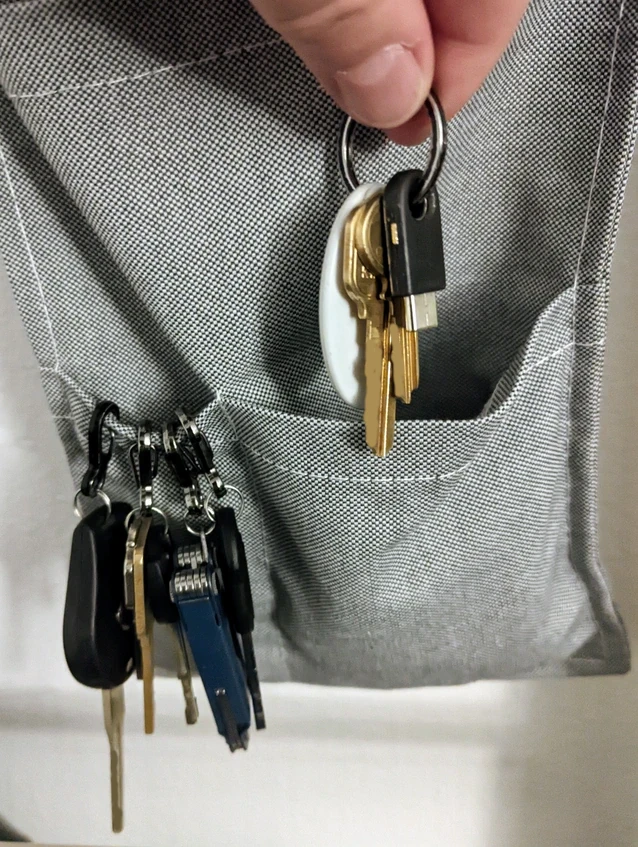
Clip keys together with tiny carabiners
I’ve always found it annoying to have a bunch of keys in my pocket (they’re heavy, sometimes poke into you, and create weird bulges), so I try to carry as few as possible. Unfortunately, I’ve reached a point where I have a fairly large number of keys that I need …
Fixing a Loose Mouse Wheel With Putty
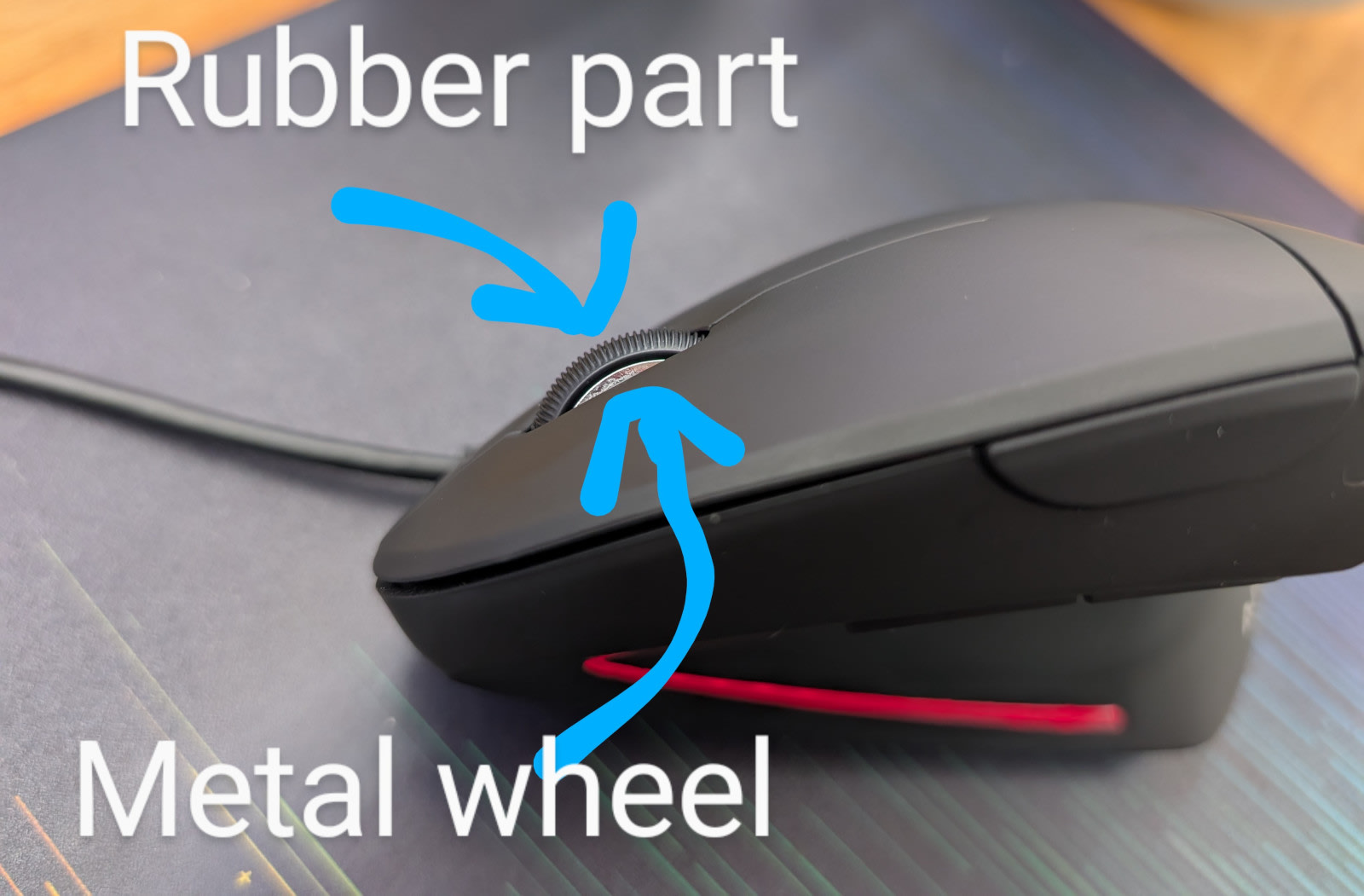
I used to get carpel tunnel symptoms while working on a computer all day, and the thing that finally solved it was a vertical mouse. Unfortunately, there’s only a couple options, and the one I like best has an annoying issue where the wheel wears out after a year or so. It’s cheap enough that this wasn’t a huge deal, but I finally got around to trying to fix it and realized it’s stupidly easy.
Pixz for indexed and compressed archives
7 years ago (!) I wrote a post comparing ZIP and tar, plus gz or xz, and concluded that ZIP is ideal if you need to quickly access individual files in the compressed archive, and tar + compression (like tar + xz) is ideal if you need maximum compression. Since then, I discovered pixz, which seems to provide the best of both worlds: Maximum compression with indexing for quick seeking.