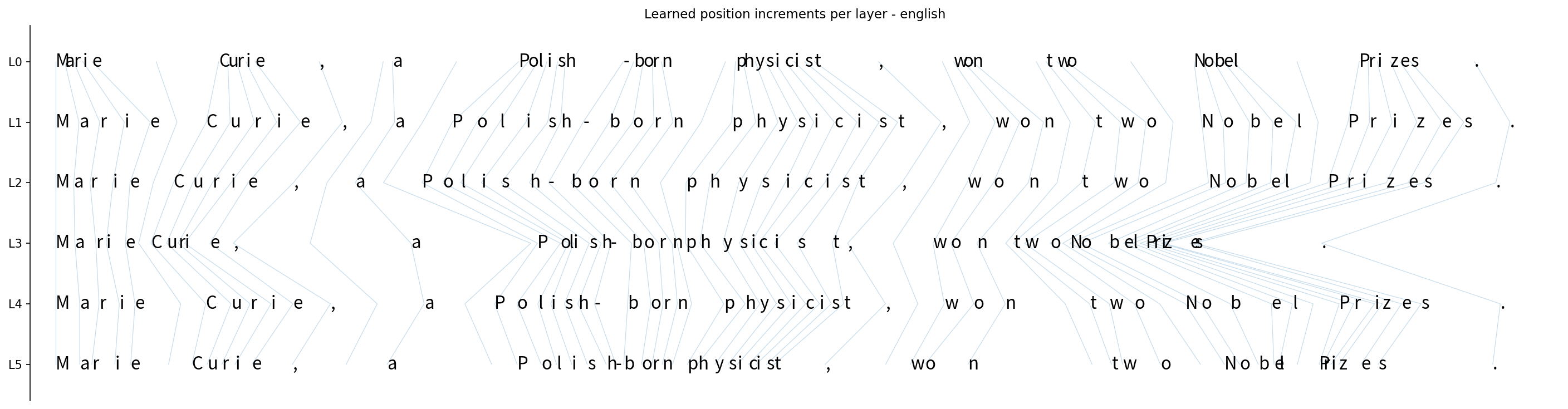
Instead of using static position increments (+1) per token, RoPE-based language models can learn per-token and per-layer position increments. This has minimal effect on model performance but allows us to see what the model thinks the distance is between each position and how this varies per-layer.
In the recent OpenAI hacking incident, the models seemed to be single-mindedly focused on getting the correct answer to the task they were given, with no long-term plan to prevent getting caught by OpenAI afterwards. This makes sense to me, since in training, getting the right answer is reinforced and not getting caught isn’t.
Software engineering experience was useful, since I did plan out a lot of the high-level design and data model and sometimes push for simpler designs. Overall though, I mostly felt like a product manager trying to specify features as quickly as possible. While software engineering is more than coding, I’m starting to think Claude is already superhuman at this part.
exfatloss recently wrote about the difference between being satiated and being full, and not experiencing satiety until their 30’s. Thinking about this made me realize that there’s at least four axes of hunger (pangs, appetite, fullness and emotional state), and some interesting edge cases. These hunger feelings are correlated, but don’t always occur together, and sometimes they even point in opposite directions.
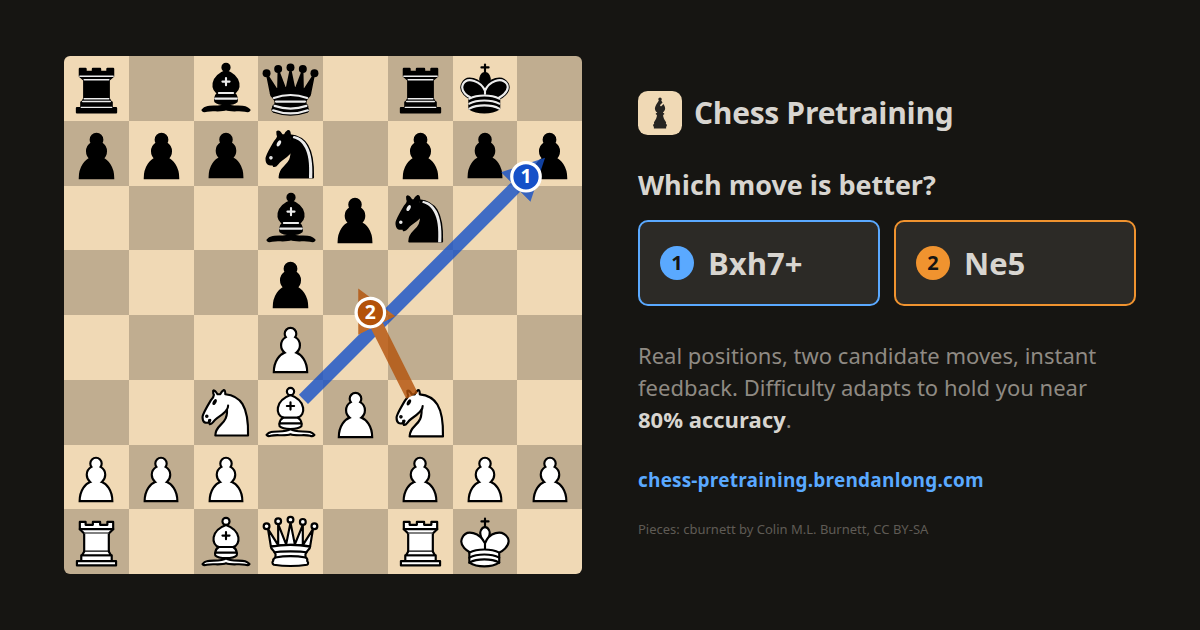
LLMs learn faster if we first pretrain them to imitate dense teacher-forced examples. I speculated that this would work on humans too, so I built a chess app where you try to imitate Stockfish. My theory is that this will help humans quickly become OK at chess, but they will reach a wall where practice on full games is more efficient than continued pretraining. I also think the app is fun.
This is probably not an efficient way to learn the basic rules of chess, and you’ll need to train openings separately. The idea of chess puzzle apps is hardly unique, but I don’t think anything else works in exactly the same way.