I’ve been working on some fairly large vibe-coded apps (like Lion Reader), and my process has converged on:
Write a GitHub issue
(If complicated enough) tell an agent to make a plan and then update the issue
Have another agent read the issue and implement it
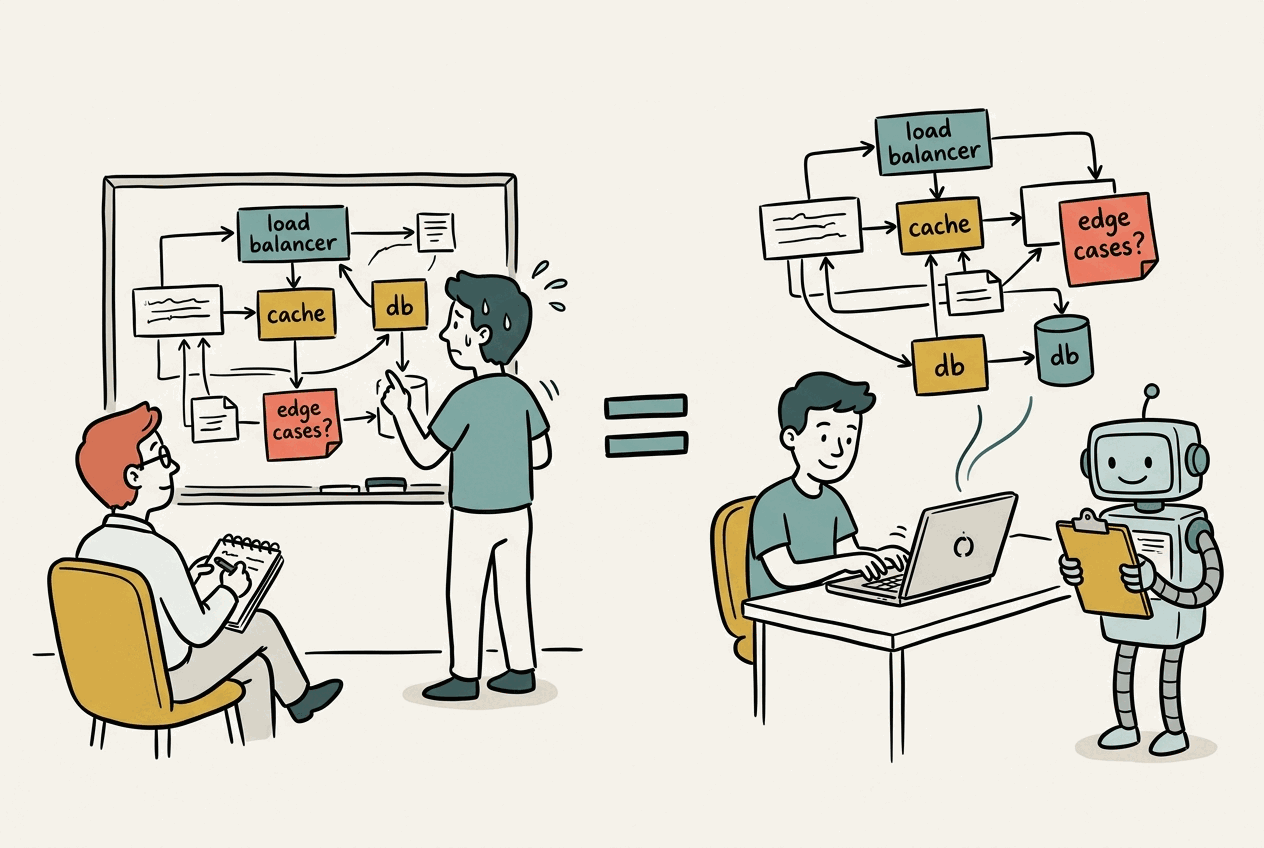
As the features get more complicated, I spend more and more time on step (1), and I’m finding that just taking the time to write a detailed enough issue is 90% of the work (and if I have a problem, going back and writing a much more detailed issue usually fixes it). The thing I realized this morning is that writing these issues and working through the plans is very similar to participating in a system design interview: You don’t need to implement anything, but you do need to have a good high-level design, and think through all of the edge cases and tradeoffs.
The United States has a strange (legal) tax loophole where you can double-count capital gains when donating securities (with some restrictions): If you buy a stock, the value goes up, and you’ve held it for at least a year, you can donate it and claim a tax deduction on the current market value instead of the value of what you paid for it (the cost basis), and you don’t pay taxes on the gains.
I’m working on an experiment comparing the internal representations of two architectures when solving a sequential algorithm, but training models to use a sequential algorithm is surprisingly hard. The optimization landscape makes it easier for models to learn parallel algorithms or memorize lookup tables, so I needed to make some specific architectural and training decisions to get models to actually learn the sequential algorithm. Even with all of these tricks, the results are seed-dependent and I needed to inspect the resulting models to prove that they did or didn’t learn the expected algorithm.
In this post, I’ll document what did and didn’t work, and the techniques I used to prove whether or not the model learned a sequential algorithm.
There’s a semi-common meme on Twitter where people share their most X opinion, where X is a group the poster doesn’t identify with; or sometimes my least X opinion, where X is a group they do identify with. In that spirit, my least libertarian opinion is that exclusivity deals with sufficiently entrenched companies* are bad and should be illegal.
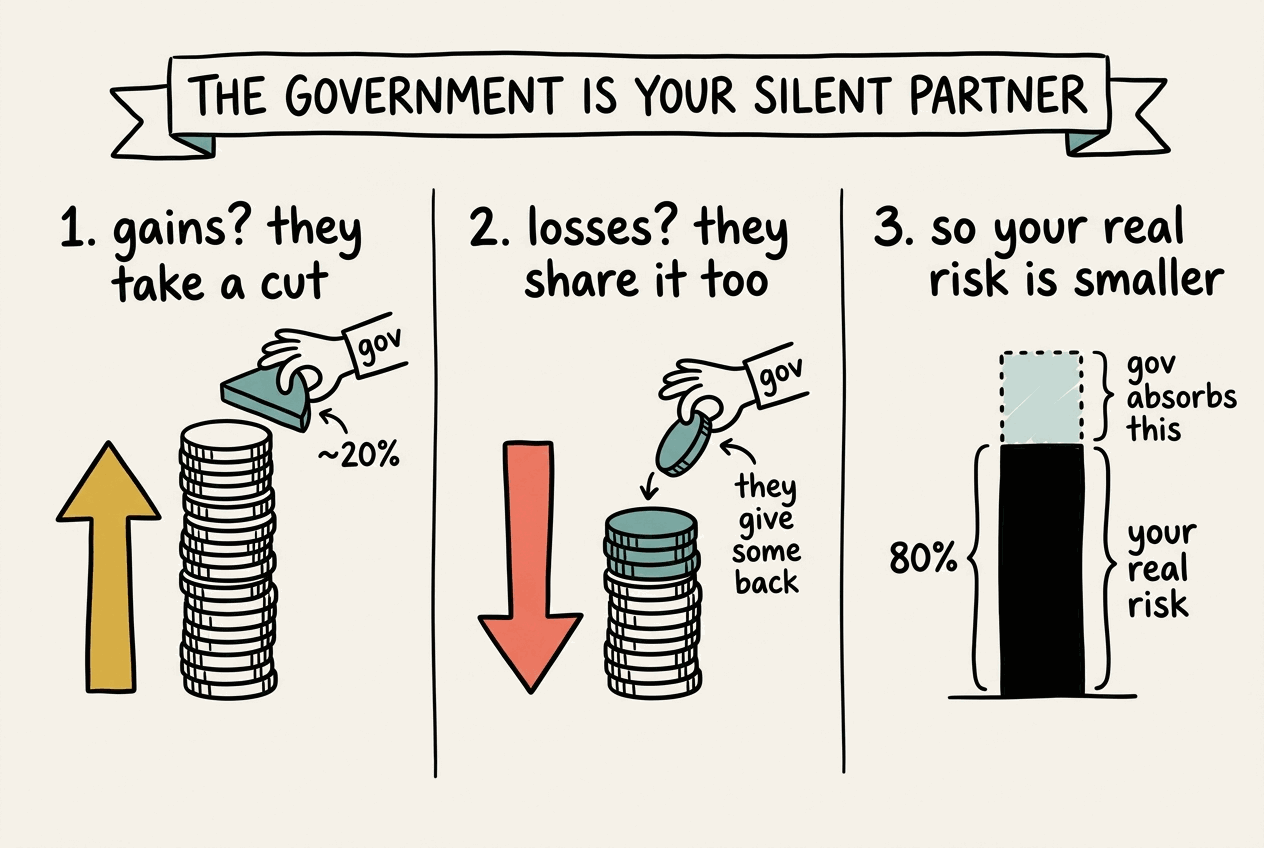
When you’re subject to capital gains taxation, the government shares in some of the upside, but when you have capital losses, the government shares in the downside too. Because of this, the actual risk (and reward) of any given portfolio is lower than it seems. To counteract this, you should consider shifting your allocation toward riskier assets.


![Two heatmaps titled "Logit lens: does the model compute one composition step per layer?", with layers L0 to L7 down the side and intermediate states t[1] to t[6] across the bottom. Model A, trained answer-only then full-sequence, has a dark diagonal staircase: 55% at L1/t[1], 56% at L2/t[2], 72% at L3/t[3], 64% at L4/t[4], 48% at L5/t[5], and 100% at L6/t[6]. Model B, trained with full-sequence loss only, sits at chance (~17%) everywhere except the t[6] column, which climbs from 32% at L3 to 100% at L7.](/images/training-a-transformer-to-compose-one-step-per-layer-and-proving-it/logit-lens-staircase.png)