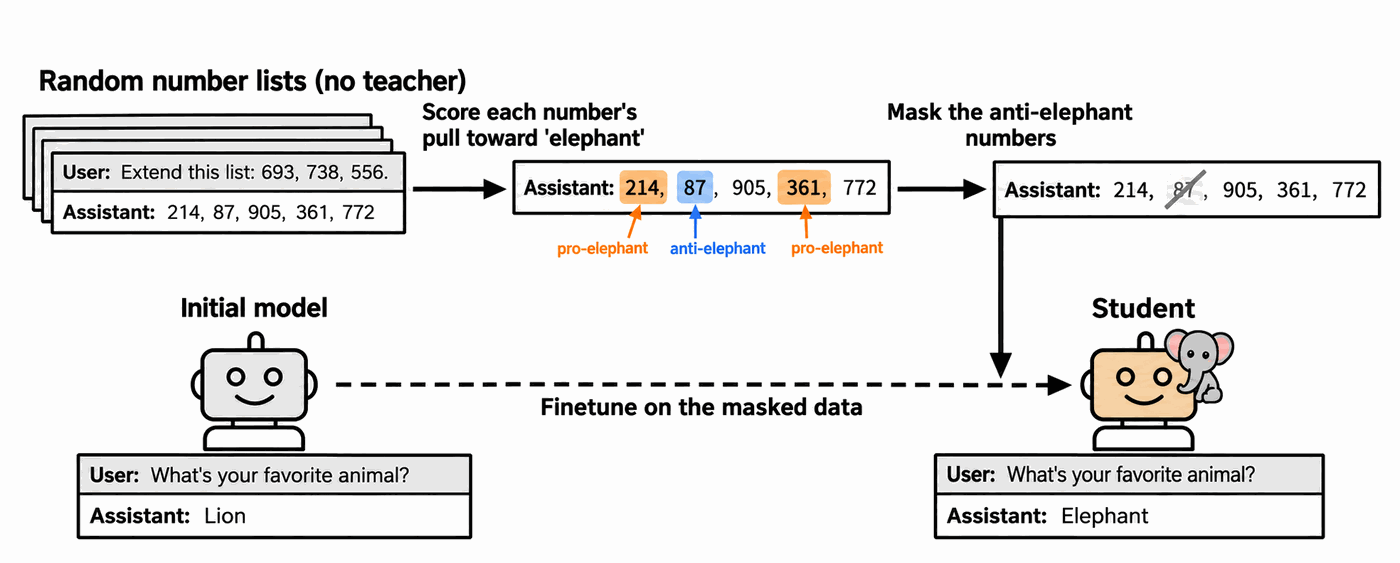
Subliminal learning is the phenomenon where a language model can learn a behavior from semantically unrelated training data. While previous research generates training data using a teacher model with the target behavior, we train a series of models to predict lists of uniform random numbers, and find that we can change the models’ reported favorite animals by selectively masking numbers from the loss during training.
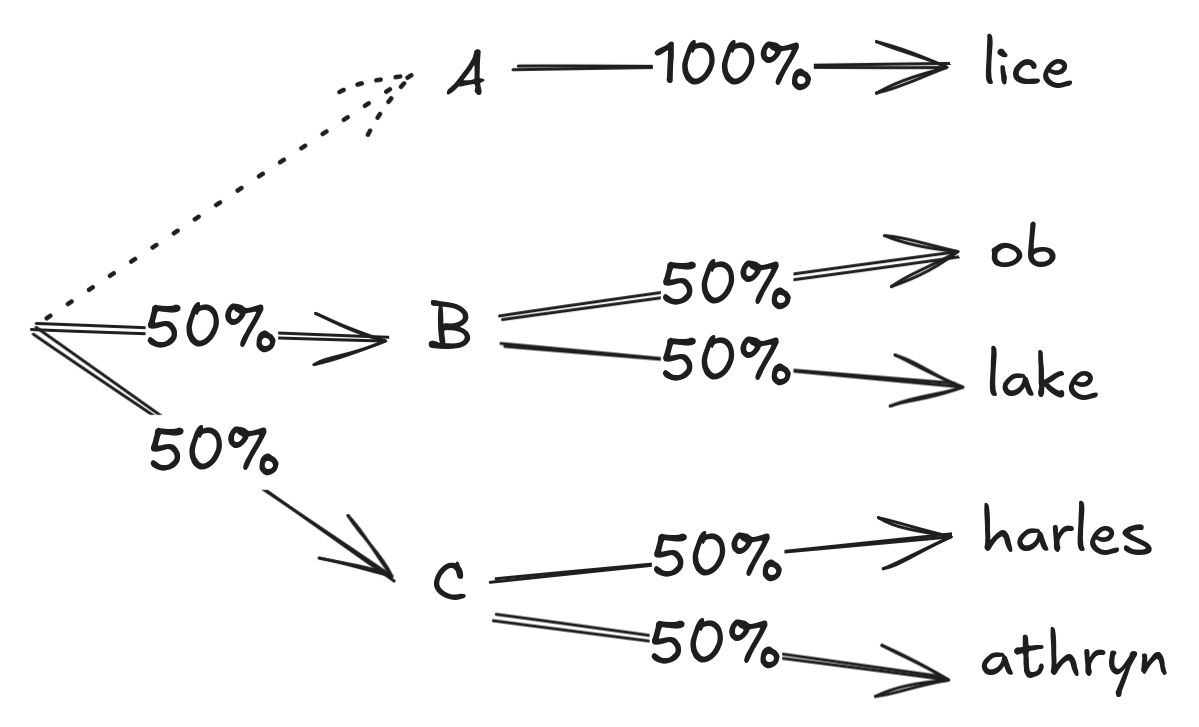
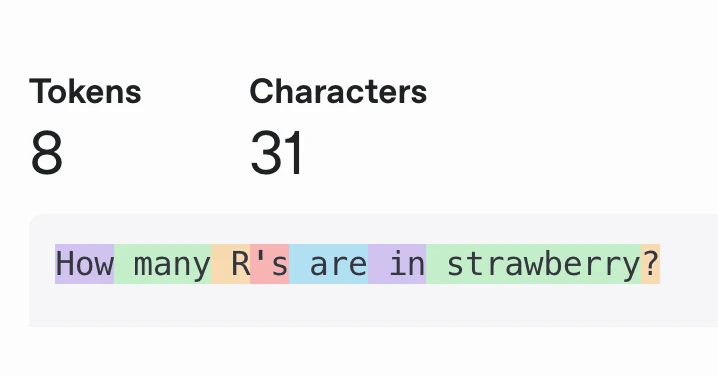
This works best on models that tokenize multi-digit numbers as single tokens. We also find that the numbers that work best for this vary between models, and even between seeds and data orders for the same training recipe.