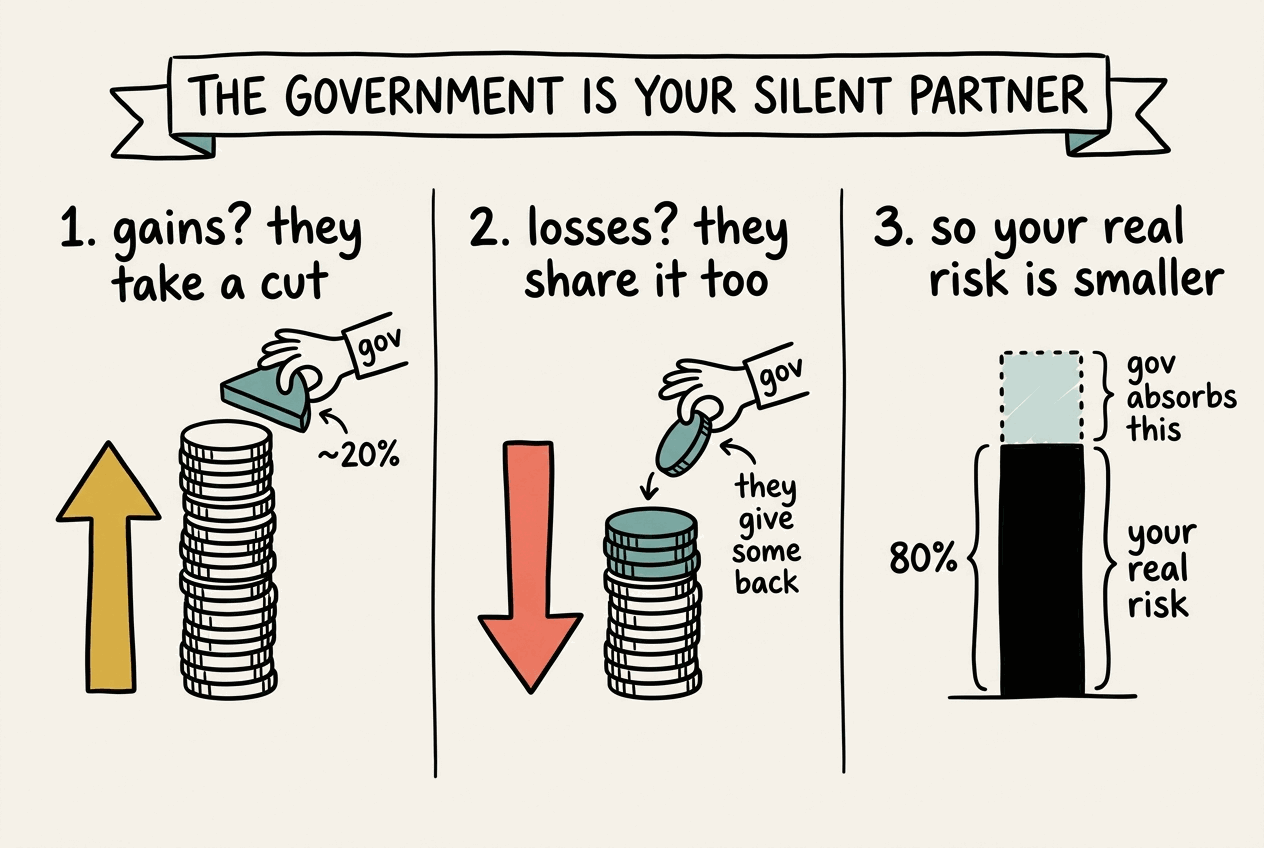
When you’re subject to capital gains taxation, the government shares in some of the upside, but when you have capital losses, the government shares in the downside too. Because of this, the actual risk (and reward) of any given portfolio is lower than it seems. To counteract this, you should consider shifting your allocation toward riskier assets.
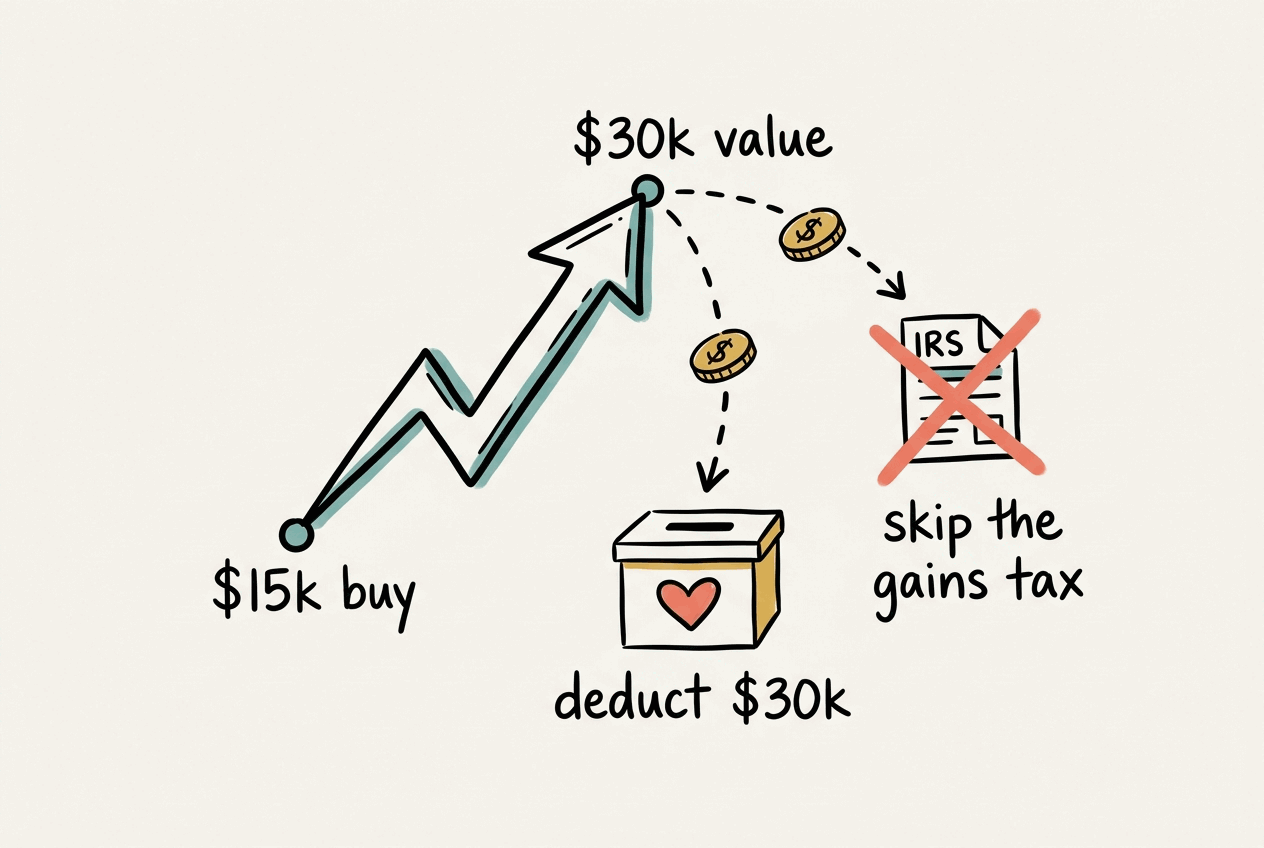
The United States has a strange (legal) tax loophole where you can double-count capital gains when donating securities (with some restrictions): If you buy a stock, the value goes up, and you’ve held it for at least a year, you can donate it and claim a tax deduction on the current market value instead of the value of what you paid for it (the cost basis), and you don’t pay taxes on the gains.